Technology & care
How AI Can Help With Diagnostics, Inspections, Repairs and Training
Where AI can organize vehicle information and support technicians, and why measured evidence and human review still guide repairs.
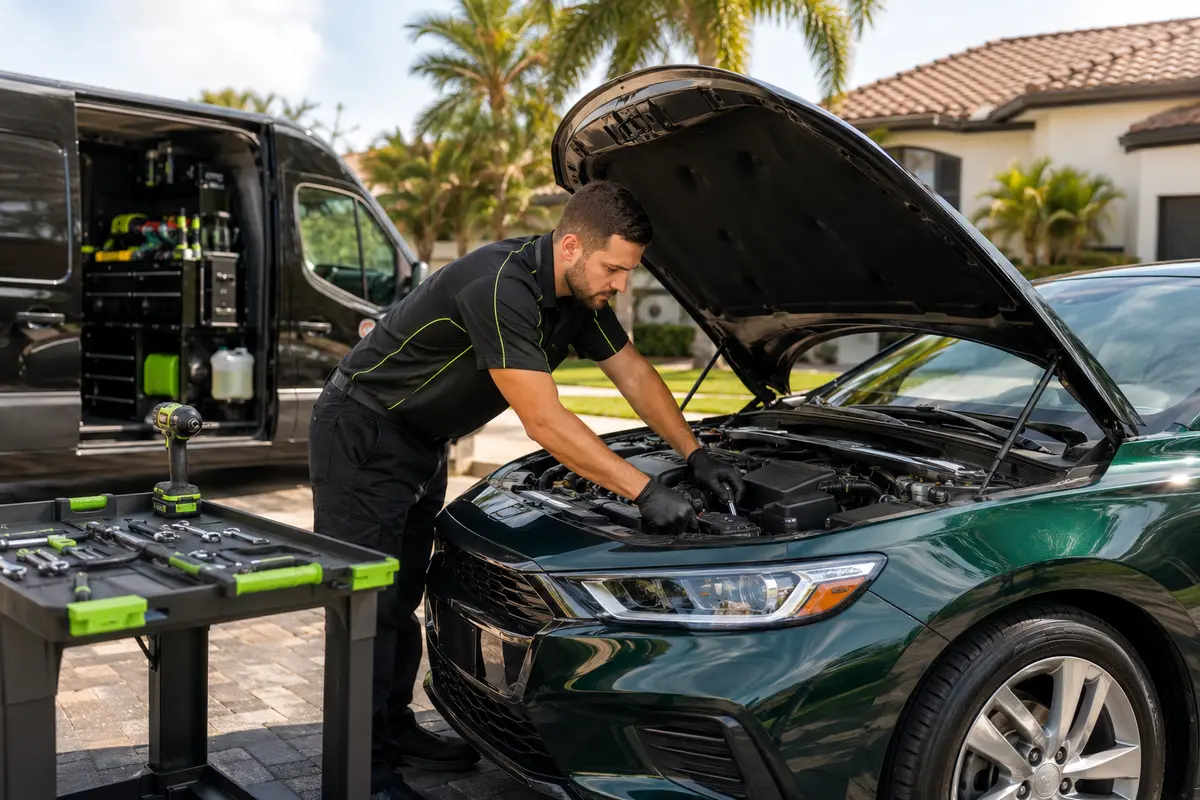
A vehicle visit produces many different kinds of information: the driver’s description, scan reports, photographs, measurements, service history and repair procedures. AI can help organize that information and make it easier for an advisor or technician to review. That is a useful opportunity when the original evidence stays available.
The strongest use of AI in vehicle care is a supported workflow: people understand the vehicle and the customer’s concern, software helps structure the information, and qualified technicians verify the findings. Here is how that can work across an ordinary service visit.
Key takeaway
AI can help organize, explain and teach. Measurements, vehicle-specific procedures and accountable human decisions remain essential.
Start with a clearer description of the problem
An AI-assisted intake can ask whether a symptom happens when the engine is cold, during acceleration or after a recent repair. It can group related answers and flag missing information for the advisor. The benefit is a more useful starting record, especially when a customer cannot describe a noise using technical terms.
The record should preserve what the customer actually said. A generated summary must not quietly change an uncertain observation into a confirmed fact. If the customer says the vehicle sometimes struggles to start, the system should not label it a failed starter before inspection.
Make diagnostic and inspection evidence easier to review
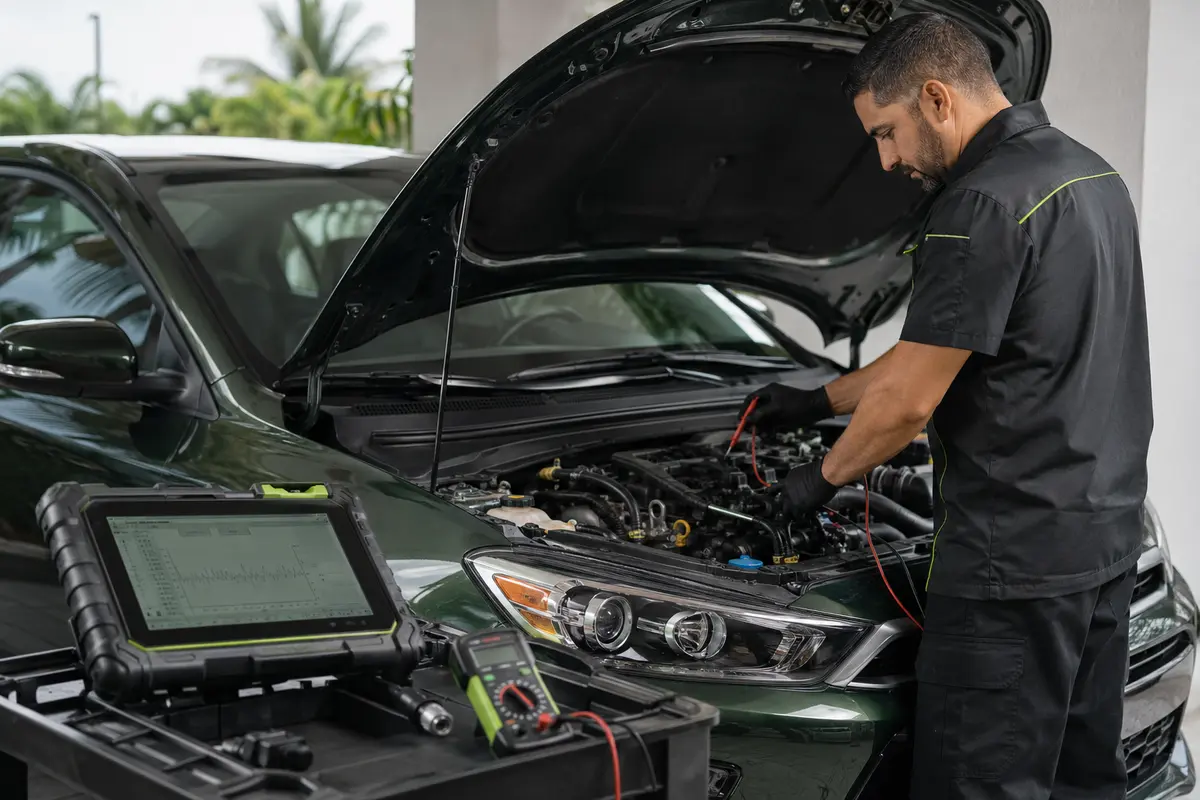
An assistant can organize a scan report, connect notes to the vehicle’s history and help prepare questions about the next diagnostic step. A technician still has to confirm the vehicle configuration, consult the relevant service information and decide which measurements are needed. A plausible explanation is a working hypothesis until the evidence supports it.
For inspections, software can help label photographs, identify missing checklist entries and turn verified notes into a readable report. It cannot measure a hidden fault from an ordinary photograph or establish that a safety-critical component is sound merely because it looks normal. Customers should be able to see which findings came from visual checks, measurements or other tests.
Recall research also needs an authoritative reference. NHTSA’s vehicle lookup is a direct starting point for checking certain open safety recalls; its published limitations still apply. An AI summary of a recall should lead back to the vehicle-specific information and the manufacturer’s guidance.
Support repair planning and customer explanations
After the finding is verified, AI can help draft a plain-language explanation of the proposed work or organize the steps an advisor needs to review. The person responsible for the estimate checks that the explanation matches the diagnosis, parts and authorized scope. It should also identify remaining uncertainty and any separate work that has not been approved.
Vehicle-specific specifications, wiring information, torque values and calibration procedures must come from appropriate verified service information. Generated text is not a substitute for those instructions. Qualified personnel remain responsible for safe work, the completed inspection and deciding whether the vehicle can be released.
Use AI to help people practice their reasoning
In training, an assistant can turn a sample case into a sequence of questions: what is known, what needs testing, and what result would change the next step? It can help a technician practice explaining a finding to an advisor or a customer. A supervisor can then review the reasoning rather than only the final answer.
Practice should stay clearly separate from real customer work. A generated training result must never become a completed inspection, a repair authorization or a live payment record. Building competence also requires supervised practical work with the relevant tools and vehicles; completing an AI exercise does not establish professional certification.
Keep human review and source checks visible
NIST identifies the risk that generative AI can confidently produce incorrect information. Its guidance includes verifying sources and evaluating capabilities with evidence. In an automotive workflow, that supports a simple discipline: retain the original information, check the proposed interpretation and correct the record when the evidence changes.
Customer information also needs appropriate handling. Teams should use authorized systems, share only what the task requires and avoid placing unnecessary personal information into a tool. A useful AI feature makes it easier to understand the service record without weakening responsibility for it.
What that means for QE customers
QE uses guided digital intake and documented service workflows, and is developing how AI supports that work. The examples in this article describe useful applications; they do not promise that every scanner, vehicle or automated feature is connected on every visit. The advisor and technician should explain the tools and findings relevant to your actual request.
The customer-facing outcome should stay straightforward: clearer questions, understandable findings, a written estimate and a record of the work you approved. Those are the measures that matter more than the presence of an AI label.
Choose your next step.
Request a diagnostic visit